

Industry
Hospital
THE Challenge
The staff at Nurse Maude hospital relied on manual documentation, observation and subjective pain assessment tools, leading to variability in how pain was assessed, monitored and managed.
THE IMPACT
Better pain identification, follow-up and care decisions. PainChek® has had a meaningful impact on patients, staff and families, strengthening person-centred care and supporting more confident clinical decision-making.
-1.jpg?width=6089&height=5464&name=230719_NurseMaude_150%20-%20Copy%20(2)-1.jpg)
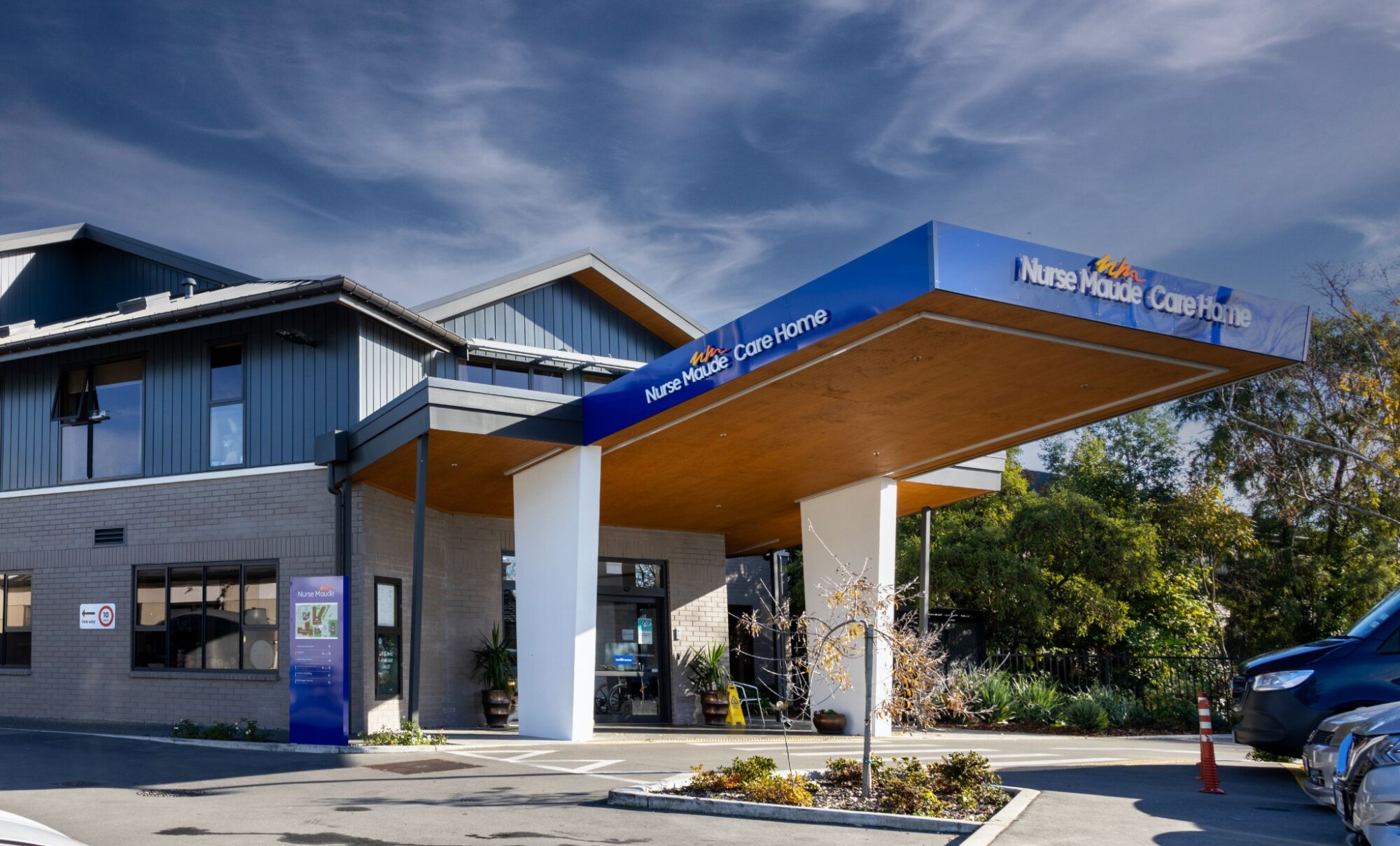
About Nurse Maude
Nurse Maude is one of Aotearoa New Zealand’s longest-standing providers of community, hospital and residential care services, with a team of over 1,250 people delivering care across these settings. Its hospital-level aged residential care facility supports people with high and complex needs, including many patients who have a dementia diagnosis or live with cognitive impairment.
Identifying and managing pain early is critical to delivering safe, high-quality, person-centred care – an approach Nurse Maude prioritises through its people and practice.
THE CHALLENGE
Objective pain assessment for patients who cannot verbalise their pain
Before introducing PainChek®, staff at Nurse Maude hospital relied on manual documentation, observation and subjective pain assessment tools. This led to variability in how pain was assessed, monitored and managed.
The clinical team needed a tool that could:
- Improve accuracy and consistency of pain assessment
- Support residents unable to reliably verbalise pain
- Strengthen confidence in clinical decisions
- Improve follow-up and communication with GPs and families (whānau)
THE SOLUTION
Embedding PainChek® into everyday practice
Nurse Maude introduced PainChek®’s medical device for pain assessment in 2024 as part of its commitment to improving care quality and outcomes.
Staff found the tool quick and simple to adopt:
“It was easy to get started with PainChek®. It’s straightforward, clear and using the tool quickly became part of our routine practice.”
– Ellamieh Rosa, Registered Nurse at Nurse Maude
PainChek® is now fully embedded across daily workflows, including:
Admission assessments to establish a baseline of the patient’s pain levels
Scheduled observations and daily rounds
Before and after PRN pain relief or other medication administration
Pre- and post-wound dressings
When a patient expresses or displays signs of discomfort
Repositioning and personal care activities
Review and documentation of pain management effectiveness, supporting handovers and GP communication
Ruth Abad, leads training for all new staff on the use of PainChek® across departments:
"I do the onboarding when staff come for orientation. PainChek® is also discussed at the clinical meeting where we share ideas on how we can better implement it on the floor.”
– Ruth Abad, Clinical Nurse Educator at Nurse Maude
THE IMPACT
Better pain identification, follow-up and care decisions
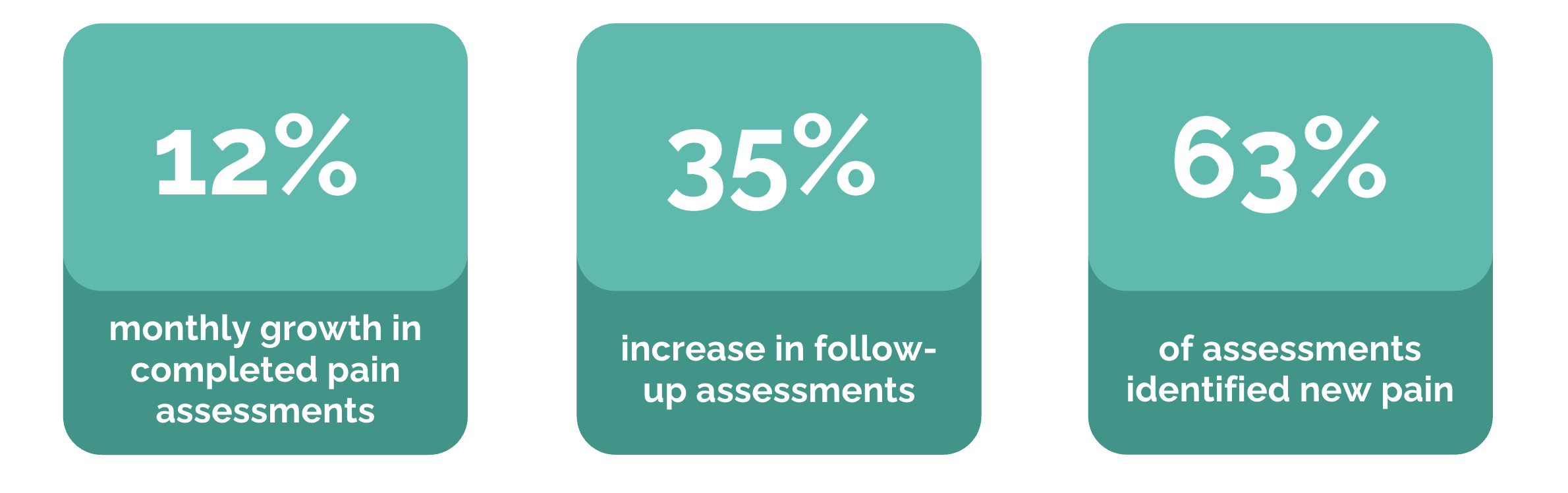
Since introducing PainChek®, Nurse Maude has seen clear, measurable improvements:
|
Staff also report improvements in clinical confidence, documentation and multidisciplinary collaboration:
"PainChek® allows us to have data to support our review with GPs around appropriate pain management. It provides a confirmation of the resident’s pain level and what our pain management should be, and how effective these interventions are.– Napat Sirihongthong, Service Manager at Nurse Maude
It also meets Ngā Paerewa standards, giving us a tool to assess, monitor and evaluate effectiveness of a medication (pain relief).”
Benefits for patients, staff & whānau
PainChek® has had a meaningful impact on patients, staff and families, strengthening person-centred care and supporting more confident clinical decision-making.
01. For patients
Earlier identification and better monitoring of pain
Improved comfort, particularly for non-verbal or cognitively impaired residents
More effective pain relief, including in palliative and end-of-life care
"PainChek® helps to determine the level of pain and with the utilisation of analgesia. It then helps to recognise the effectiveness of the analgesia.”
– Pooja Gupta, Registered Nurse at Nurse Maude
"PainChek® is very helpful, especially with non-verbal patients.”
– Tijana Rausevic-Tobdzic, Registered Nurse at Nurse Maude
"It’s very effective for people who have had a stroke or are non-verbal.”
– Magnolia Paraiso, RN Coordinator at Nurse Maude
02. For staff
Clear, objective guidance reduces uncertainty
Greater confidence in clinical decision-making
Stronger evidence to support pain management reviews
"It gives us a clear and objective measure of pain. Easy to use and very useful
for supporting end-of-life care and how we manage pain.”
– Catherine Millabangco, Registered Nurse at Nurse Maude
03. For families (whānau)
Increased confidence that pain is being assessed objectively
Reassurance that discomfort is recognised and addressed promptly
"We have residents on palliative care who can’t verbalise their pain or discomfort. With the use of PainChek®, we have managed their pain a lot better. Families and patients are happy that we are using a pain assessment app to better assess and manage their pain levels.”
– Hermie Nuqui, Registered Nurse at Nurse Maude
Highlighting the positive impact on staff confidence in clinical-decision making, and on patients’ comfort:
"Pain is talked about more and pain assessment is readily available, so staff are more open to completing one. It puts into a visual representation how much pain a resident is in and they strive to alter that. With pain assessment done, they feel more confident to give out pain medication.
For residents, having pain relief immediately improves their mood and tolerance for interventions such as wound dressings. They are appreciative that they are asked about their pain levels, and families are grateful. Anybody who sees us using PainChek® for the first time is impressed that we have access to this technology.”
– Ruth Abad, Clinical Nurse Educator at Nurse Maude
Stepping into the future of pain assessment
Nurse Maude's experience shows how AI-enabled pain assessment can strengthen
care quality and support better outcomes.
DOWNLOAD THE PDF
"I would strongly advocate for PainChek® to be available to all nurses in all fields. It makes pain assessments so much more credible and accessible.
Time to step into the future of pain assessment.”
– Ruth Abad, Clinical Nurse Educator at Nurse Maude
Interested in bringing PainChek® to your organisation?
Get in touch to learn how PainChek® can support better care
outcomes across your organisation.